How to Create a Winning Pitch Deck in 2026: 5 Essential Rules for Startup Founders
The first time you sit down to build a pitch deck, it feels impossible. You have a massive vision, a complex product, and a million things you think you need to tell a potential investor. But the truth is, most founders overcomplicate their first deck, and it kills their chances.
Written by Ruthie Okere | Edited by Sylvester Omotunde
Consider the two 20-year-old founders who walked into investor meetings with a 7-page deck that was admittedly mostly clutter and walked out with $750,000 from 28 different investors. They succeeded because their core message was strong enough to survive the clutter. Their story proves the ultimate principle: Clarity beats complexity.
If you’re writing your first pitch deck, these five essential rules, modelled by companies that raised millions, will help you ditch the fluff and focus only on what matters.
Pitch Deck Rule 1: The 3-Slide Rule
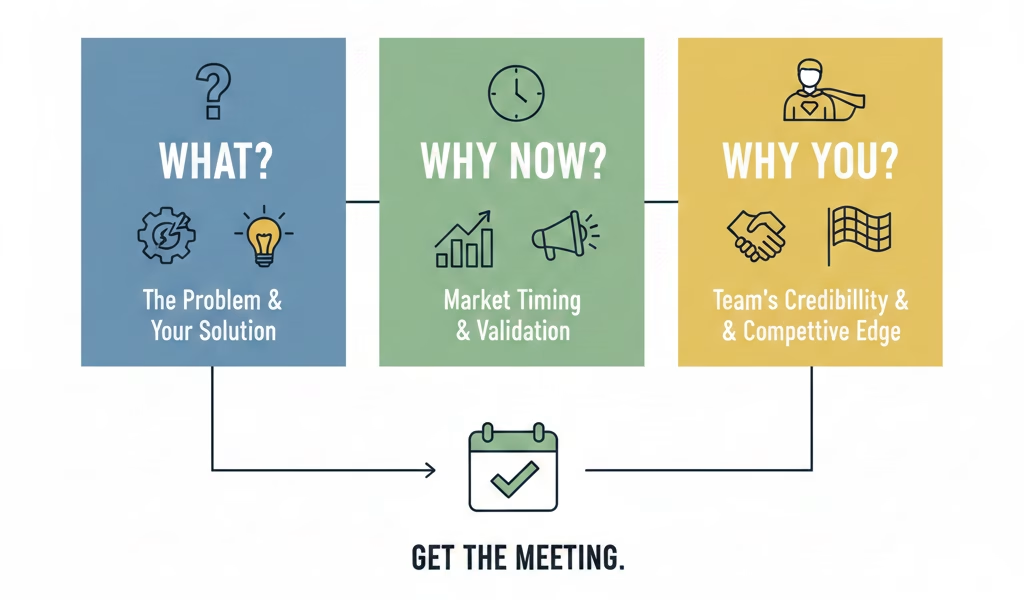
Your Pitch Deck Only Needs to Answer What? Why Now? and Why You?
When you’re new to fundraising, the natural instinct is to cram everything in: the detailed financials, the 10-year growth plan, the extensive technical roadmap. However, this is a mistake. Your deck’s primary job isn’t to provoke an investment decision; it’s to get a meeting.
Pre-seed investors agree that if you answer three core questions clearly, you’ve done your job:
What? The problem and your solution.
Why Now? Market timing and validation.
Why You? The team’s credibility and competitive edge.
Beginner Action:
If a slide doesn’t directly support one of these three questions, delete it. As Alex Lieberman, the Co-founder of Morning Brew, admitted about his team’s early pitch, “75% of this was fluff.” All investors really care about is your business plan & how you plan to use their money. Save the fluff for the follow-up meetings.
Rule 2: Clarity in the Pitch Deck
Explain Your Idea to a 5th Grader
Investors see hundreds of pitches. If your problem statement or solution is confusing, they will move on. Your goal is to lead with a clear pain point that investors can feel, then explain your solution with simplicity.
Lead with the Problem: Don’t start with your app’s features. Start with the universal frustration or unmet need that your company exists to solve. This anchors the investor emotionally.
Show a Vision, Not a Product: Do not detail every button and feature. Instead, paint a picture of the future state. How will the world operate once your solution is adopted? This turns your product into an inevitable necessity.
Beginner Action:
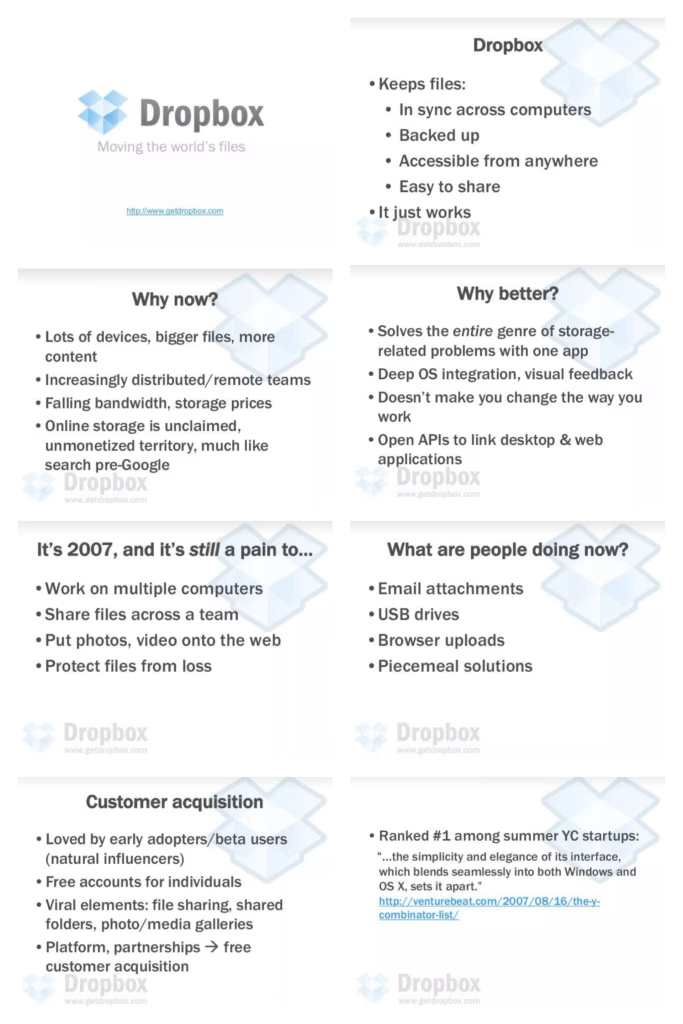
Write down your pitch and read it to someone outside your industry. If they don’t immediately understand the value you create, go back and simplify. Think of Dropbox and their legendary pitch deck: it raised $1.2M by focusing on a universal pain: “Where did I put that file?” and showing a future of seamless access.
Rule 3: Pitch Your Team
Prove You're the Only Team Who Can Do This
New founders often feel they lack the “big-name” track record. But credibility isn’t just about a past IPO; it’s about Founder-Market Fit (FMF).
Your “About the Team” slide is your credibility check. To ace it, you must explain why your team, specifically, is uniquely equipped to solve this problem.
Highlight Passion and Pain: Have you lived the problem you’re solving? Personal obsession often counts more than a resume full of irrelevant jobs.
Show, Don’t Just List: Don’t just list titles. Highlight the relevant experiences that prove you can execute. If you have light experience, mention early advisors or supporters who add instant credibility.
Beginner Action:
Write one sentence for each founder that connects a past success or experience directly to a key challenge in your current startup. Example: “John was a customer support agent for 5 years, giving him deep insight into the broken B2B workflow we are fixing.”
Need Help Structuring Your Story?
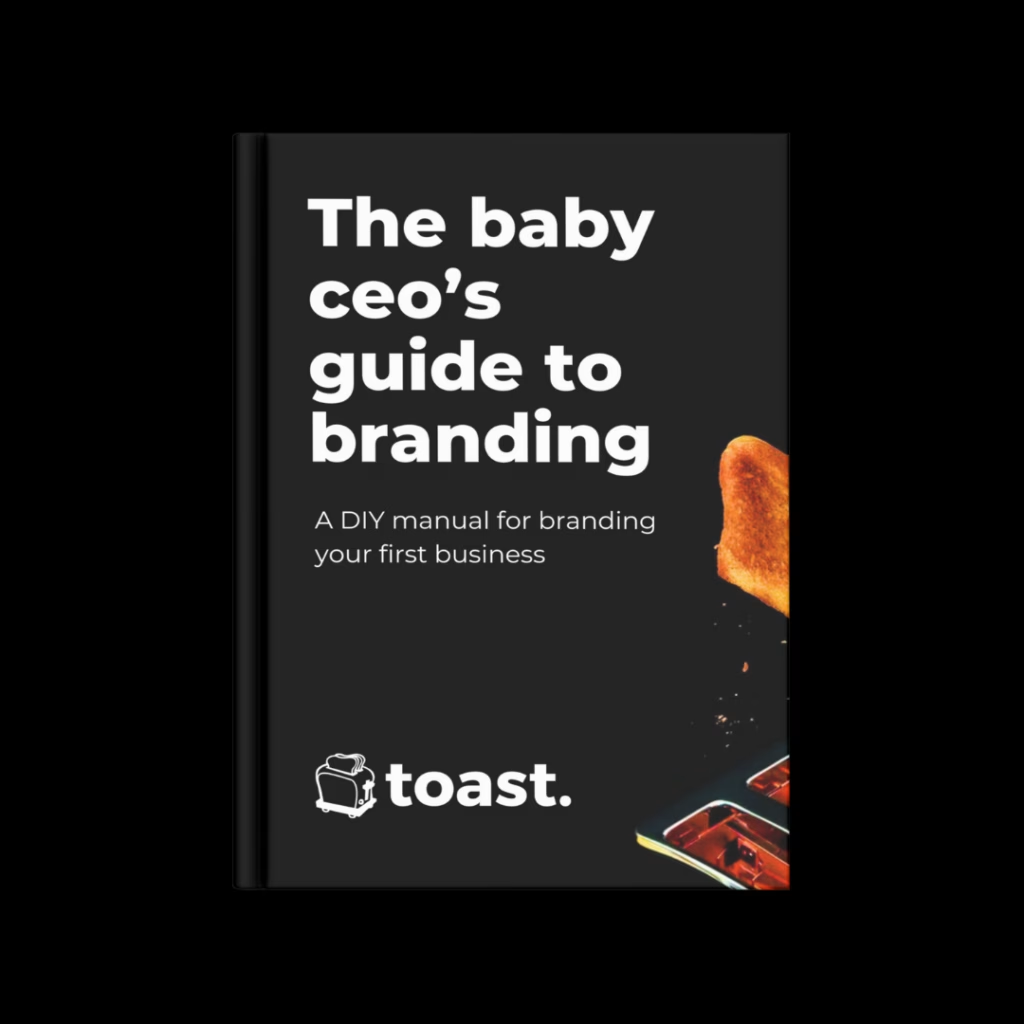
At Toast Creative Studios, we’ve created “The Baby CEO’s Guide to Branding” to give founders the clarity they need to nail the 3-Slide Rule. And It’s Free!
The moment you start showing your deck, investors are looking for proof that your idea works. For a new founder, traction is your substitute for revenue. You don’t need millions in sales to impress them.
Traction can be:
Validation: User sign-ups, waitlist growth, pilot programs.
Behaviour: Customer engagement metrics (e.g., users open the app 5 times a week).
Commitment: Key partnerships or letters of intent from large customers.
Beginner Action:
Include a dedicated “Traction/Milestones” slide. Clearly define what success looks like in the next 12 months (e.g., “1,000 users in 6 months”) and show what you’ve achieved so far. Even promising growth in a small niche is better than vague claims.
Rule 5: Keep Your Pitch Deck Simple
Design is Your First Credibility Check
A messy, cluttered, or inconsistent deck signals that your business operations are likely messy, cluttered, and inconsistent. Design is communication.
Your first deck doesn’t need to be a masterpiece, but it must be clean, organised, and easy to read.
One Idea Per Slide: Every single slide should focus on one core concept. If you find yourself using font size 10 to fit everything, break that content into two separate slides.
Use Visuals: Use charts, product mockups, and clear graphics over dense paragraphs of text.
Beginner Action:
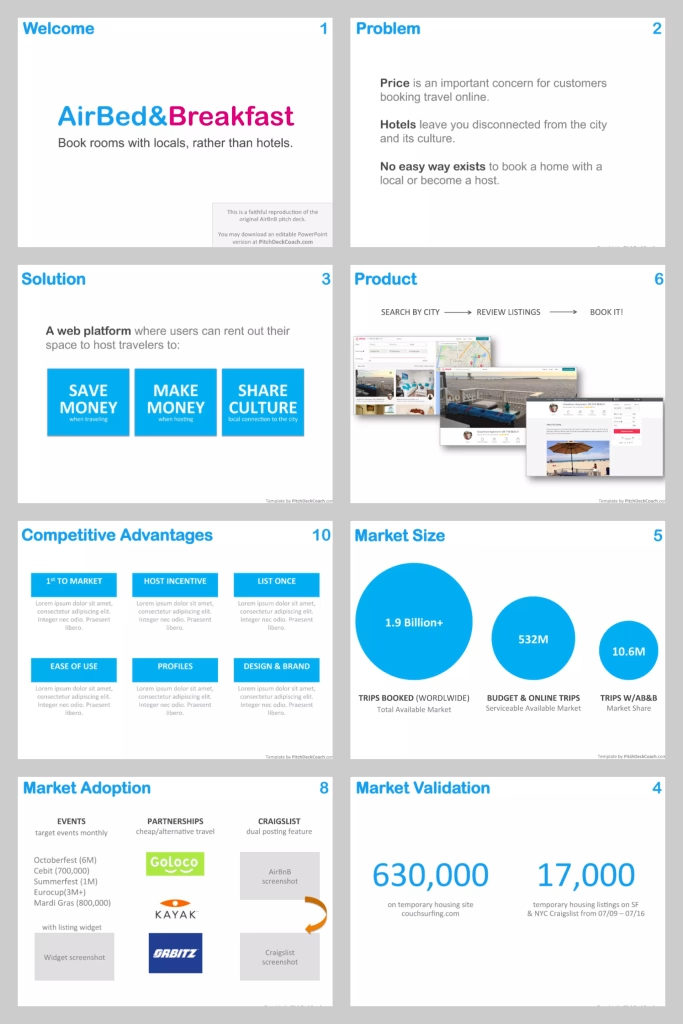
Use a minimalist, professional template (there are many free options). Stick to a consistent colour palette and font. If you’re unsure about your design, borrow the simplicity of the early Airbnb deck; it was clean, focused, and didn’t have any clutter or confusion.
Don't Let Poor Design Kill a Great Idea.
At Toast, we specialise in transforming your content into professionally crafted visual designs that signal competence and make your pitch memorable.
The perfect Pitch deck doesn’t exist. The effective deck is the one that is clear, concise, and compelling enough to spark curiosity; You don’t need a 50-slide presentation to raise money. You just need clarity.
Start today by creating your first three slides: What, Why Now, and Why You.
If you can get those three right, the rest is just execution.
2 Responses
Clear examples and step-by-step actions. Very handy, thanks!
This is an easy to understand yet detailed read. Another thing I noticed while I was reading through is that this van be used in other type of presentation and I am definitely going to try it out.


2 Responses
Clear examples and step-by-step actions. Very handy, thanks!
This is an easy to understand yet detailed read. Another thing I noticed while I was reading through is that this van be used in other type of presentation and I am definitely going to try it out.
Thank you for sharing this.